
Guides · 16 and growing
The EYFS in practice, for the people in the room.
Each guide answers one real question, gives you something to use today, and names the statutory source so you can check it yourself.
Every guide shows when it was last checked against the EYFS.
Compliance
- EYFS changes 2025 and 2026: what changed and what to doEvery EYFS change from September 2025 and September 2026, which framework it sits in, and a checklist of the policies and practice to update.
- How Ofsted inspects early years now: report cards, grades, the dayThe renewed Ofsted early years inspection explained: the seven evaluation areas, the five-point scale, what happens on the day, and a checklist.
- EYFS staff:child ratios in England, explainedEvery EYFS ratio for nurseries and childminders, the qualification rules behind them, students, breaks, outings, and a worked mixed-age example.
Safeguarding
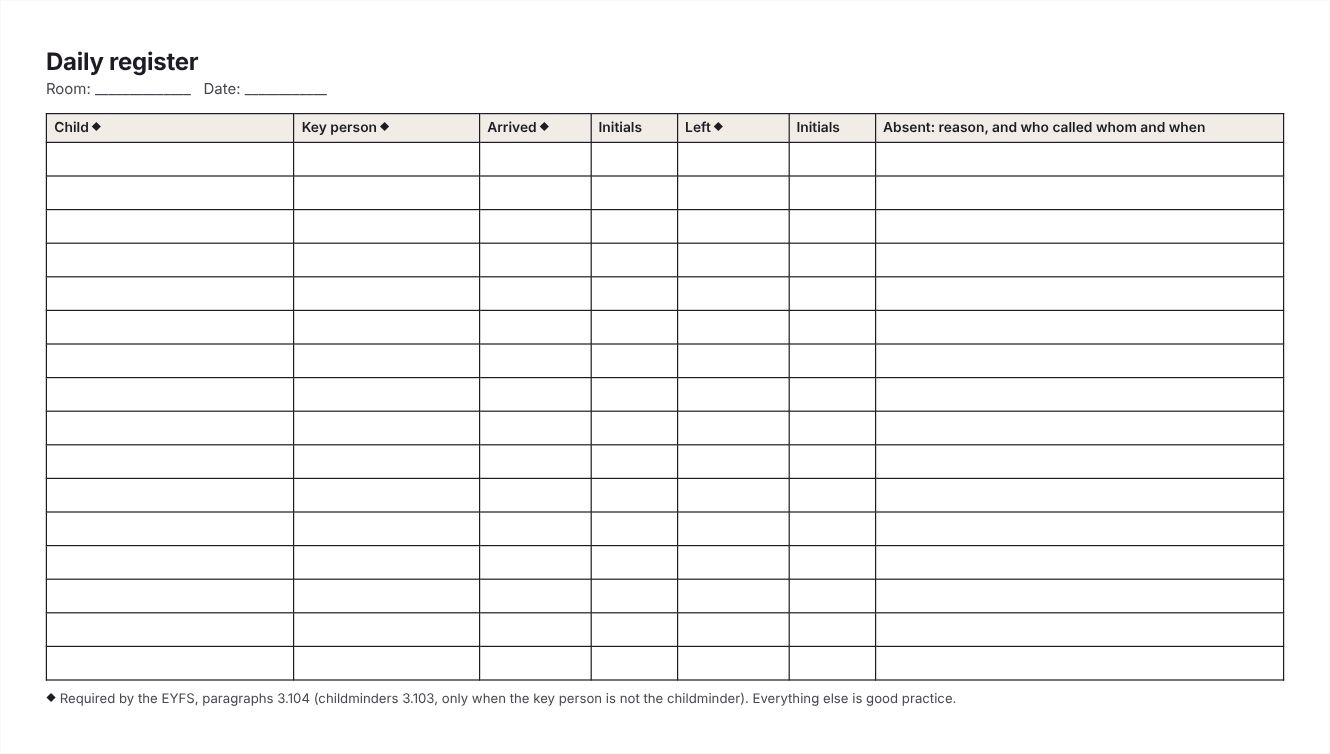
- Following up a child's absence: what the EYFS requiresWhat the EYFS says about unexplained and prolonged absence, how to build a follow-up procedure, and an adjustable escalation ladder.
- Photos of children at nursery: consent and UK GDPRWhich lawful basis covers nursery photos, when you need consent, staff phones, parents at events, storage, and a photo-policy checklist.
Health and safety
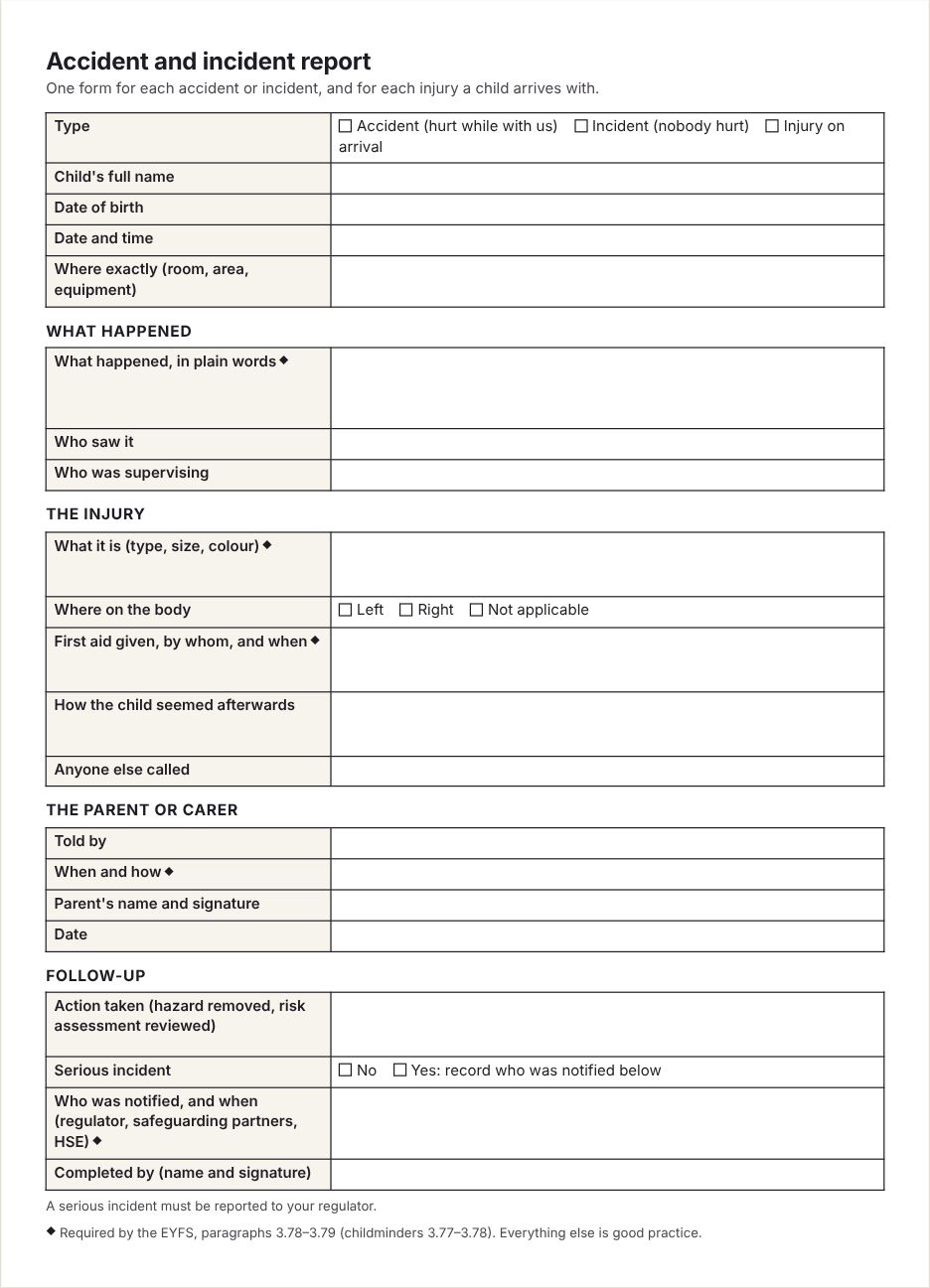
- Accident and incident records in nursery: who to tell, and by whenWhat the EYFS requires for accident records, when to tell parents, Ofsted and child protection agencies, and when RIDDOR applies. With a field list.
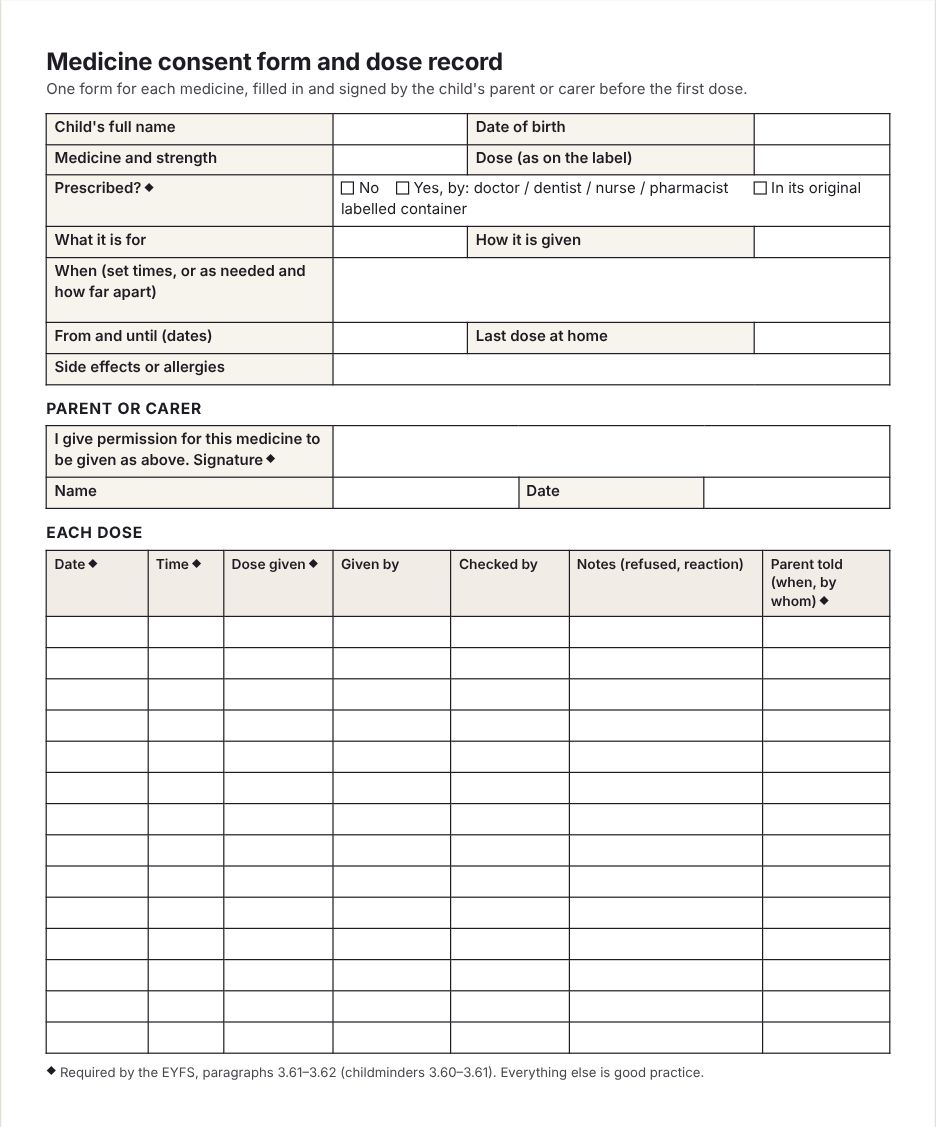
- Giving medicine in a nursery: consent, records and the rulesWhat the EYFS requires before you give a child medicine: written consent, prescribed vs non-prescribed, records, training and storage. With a checklist.
- Safe sleep in nursery: the EYFS rules from September 2026The new EYFS safer sleep requirements explained: cots for under-ones, sleep checks, car seats and buggies, and what to say to parents. With a room checklist.
- Safer eating in nursery: choking, allergies and mealtime supervisionThe EYFS safer eating rules explained: sitting with children, first aiders at mealtimes, cutting food safely, allergies and the 14 allergens. With checklists.
Working with parents
- Settling in at nursery: a two-week plan and what to ask parentsWhat the EYFS says about the key person and starting nursery, a flexible two-week settling plan, and the questions to ask parents before day one.
- Choosing a nursery parent app: the questions to ask suppliersThe questions to ask any nursery parent app supplier about data, photo consent, leaving, notifications and shared devices, with good answers.
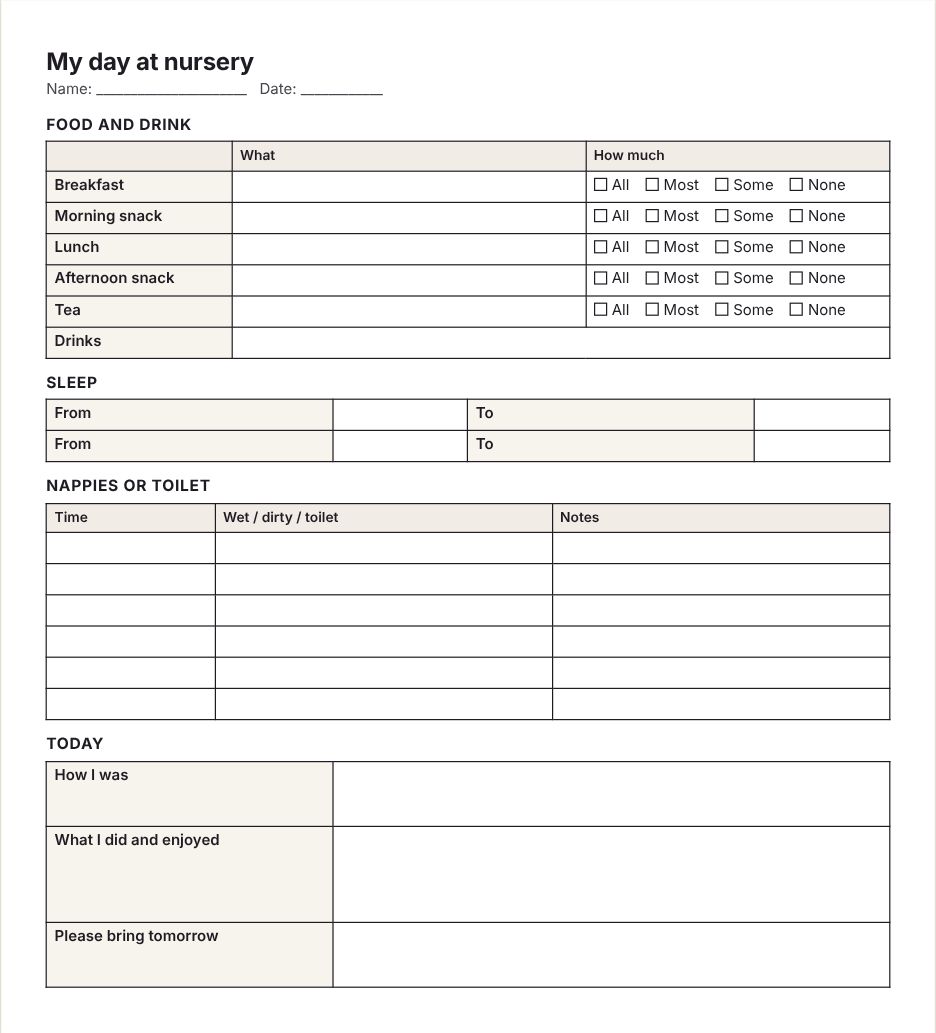
- Nursery parent communication: what to share, when and howWhat the EYFS requires you to tell parents, why WhatsApp groups cause trouble, and a daily, weekly and termly rhythm your staff can keep up.
Practice
- The key person approach: what the EYFS requires and how it worksThe EYFS key person requirement explained, with how to make it work around shifts and part-time staff, a responsibilities checklist and a handover note.
- What Ofsted does not require: observations, journals and trackingWhat Ofsted and the EYFS say you do not need for inspection, what you must still keep, and a keep, stop or it-depends table for your paperwork.
- The EYFS progress check at age two: who, when and what to writeWho does the two-year progress check, when, what it must cover, how it links to the health visitor's review, and a plain-English template.
Childminders
No guide matches that yet. Try another word, or tell us what you were looking for at hello@coatpeg.co.uk.